

How to Build a B2B SaaS MVP in 12 Weeks
A 12-week, phase-by-phase blueprint for shipping a production-grade B2B SaaS MVP. Covers discovery, architecture, build phases, and launch readiness with specific stack recommendations and scope guardrails.
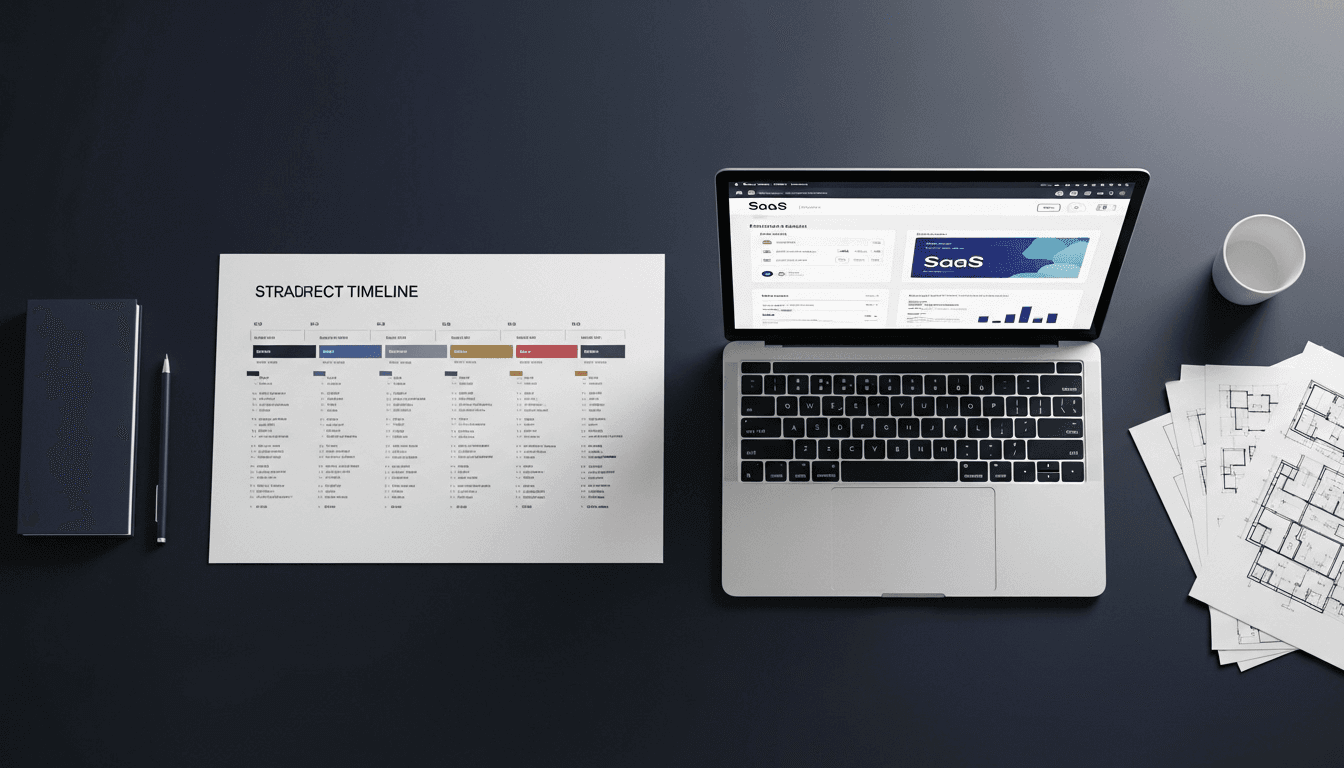
How to Build a B2B SaaS MVP in 12 Weeks
A B2B SaaS MVP is a production-deployable version of your product that validates core workflow assumptions with paying users, built intentionally within a fixed time and scope constraint. Twelve weeks is achievable — but only with a pre-locked scope, a modern opinionated stack, and a team that doesn't debate architecture decisions mid-sprint.
Most SaaS projects fail not because of bad ideas but because of scope creep, stack indecision, and building for hypothetical scale before finding product-market fit. This guide is a framework for avoiding all three.
How the 12-Week Framework Works
The 12 weeks divide into four phases, each with a non-negotiable exit condition. Skipping an exit condition means the next phase starts on a broken foundation.
Phase 1 — Discovery & Scope Lock (Weeks 1–2)
This is where most teams under-invest. The goal is not to design every screen — it's to answer three questions with certainty: What is the single core workflow the MVP must enable? What does "done" look like for a beta user? What are we explicitly not building?
Deliverables: a one-page scope doc, a data model draft, and a decision on auth strategy (more on this below). If you're working with Magehire's B2B SaaS development team, this phase includes a technical discovery session that maps your business logic to infrastructure choices before a line of code is written.
Phase 2 — Architecture & Scaffolding (Weeks 3–4)
Stack is set up, CI/CD is live, environments are running. No feature code ships until the pipeline is green. This phase exists to eliminate the "it works on my machine" problem forever, and to make sure every developer on the team is shipping to the same branching and deployment model from day one.
Typical scaffold: Next.js 14 (App Router) for the frontend, a Node.js or Python API layer (depending on your team's strength), PostgreSQL via Supabase or Neon for the database, Clerk or Auth0 for auth, Vercel or Railway for hosting, and GitHub Actions for CI.
Phase 3 — Core Build (Weeks 5–10)
Six weeks of focused feature delivery. Two-week sprints, each ending with a deployed, demo-able increment. This is the phase where scope lock pays off — if it's not in the scope doc, it doesn't get built.
A common mistake here is building admin dashboards and settings UIs before core user flows are stable. Build the happy path first: the workflow that a user signs up, completes, and gets value from. Everything else is secondary.
Phase 4 — Hardening & Launch Prep (Weeks 11–12)
Not a "polish phase" — a production-readiness checklist. Error handling, loading states, rate limiting on critical endpoints, basic observability (Sentry for errors, PostHog or Mixpanel for usage events), and a manual run-through of the entire user journey by someone who wasn't on the build team.
Stack Comparison: Opinionated Choices for Speed
Different stack choices have dramatically different time-to-productive implications. This table covers the most common decision points for a B2B SaaS MVP in 2026.
| Decision | Fast Choice | Slower Choice | Why |
|---|---|---|---|
| Frontend | Next.js 14 | Custom Vite + React SPA | App Router eliminates boilerplate routing and layout work |
| Auth | Clerk | Rolling your own JWT auth | Clerk ships MFA, SSO, and org management out of the box |
| Database | Supabase (Postgres) | MongoDB + Mongoose | Schema discipline catches data model issues early |
| Payments | Stripe Billing | Custom invoice flow | Stripe handles proration, trials, and dunning automatically |
| Hosting | Vercel + Railway | Self-managed AWS | Zero DevOps overhead at MVP stage |
| Resend | SendGrid (complex setup) | Resend has a developer-first API and React Email templates |
The pattern: choose tools that eliminate categories of work, not tools that give you the most control. Control is valuable at scale — at MVP, it's a liability.
Use Cases: What 12 Weeks Can Actually Ship
The 12-week timeline is realistic for a focused B2B SaaS product. It is not realistic for a platform with 40 user roles and five integration points. Here are examples of MVPs that fit the timeline:
Workflow automation tools — A product where users connect a data source, define rules, and receive automated outputs. Examples: invoice processing tools, compliance checklist platforms, approval workflow software.
Internal tooling SaaS — Software sold to operations or finance teams to replace spreadsheets. Dashboard, CRUD interface, export functionality. This category ships fastest because the UX bar is lower than consumer products.
Vertical AI features — A SaaS product with one AI-powered core feature (document summarization, contract analysis, call transcription) built on top of GPT-4o or Claude 3.5 Sonnet, with surrounding workflow logic that creates stickiness. See Magehire's AI automation consulting work for how these features get scoped.
Two-sided coordination tools — Platforms that connect two user types (e.g., recruiters and candidates, vendors and procurement teams). Harder to scope, but doable in 12 weeks if the core interaction loop is narrow.
When to Use This Framework — and When Not To
This framework works when: you have a defined target user, you're not integrating with more than two external systems at MVP, and you have budget for 1–2 senior developers or a specialist agency over the 12-week window.
It doesn't work when: your MVP requires custom infrastructure (real-time data pipelines, complex ML model serving), you're in a heavily regulated industry that requires compliance work before launch (healthcare, fintech), or your scope isn't locked before development starts.
If you're in those categories, a 16–20 week timeline with a discovery-heavy Phase 1 is more honest.
How to Get Started: The Pre-Build Checklist
Before week one begins, five things need to be true:
1. Scope is written down and signed off. Not in someone's head — in a document that lists features, explicitly lists what's out of scope, and has been read by every decision-maker on the project.
2. The data model is drafted. You don't need a final schema, but you need to understand your core entities (users, organizations, the thing your product manages) and how they relate. Surprises in the data model in week 7 kill timelines.
3. Auth strategy is decided. Are users logging in as individuals or as part of an organization? Do you need SSO from day one? Do you need role-based access control at launch? These aren't product questions — they're architecture questions with week-one implications.
4. Hosting and environments are provisioned. Development, staging, and production should exist before feature code starts. The two hours it takes to set this up in week one saves ten hours of environment debugging in week six.
5. You have the right team. A 12-week SaaS MVP needs at minimum one senior full-stack developer who has shipped a SaaS product before. Generalist developers learning on the job in a fixed timeline is a risk multiplier, not a cost saving.
If all five are true, week one begins with scaffolding. If they're not, week one is discovery — and the 12-week clock hasn't started yet.
Ready to Ship Your B2B SaaS MVP?
Magehire has taken B2B SaaS products from scope doc to production in 12 weeks with teams who've done it before. If you have a product to build and a timeline to hit, schedule a strategy session and we'll tell you within the first call whether 12 weeks is realistic for your scope.
?Frequently Asked Questions
Keep Reading
Explore more insights from our team

Etched Hits $5B Valuation and $1B Sales in AI Chip Market
Etched emerges as a formidable rival to Nvidia, achieving a $5 billion valuation and $1 billion in sales, reshaping the AI chip landscape.
How to Automate Business Processes With LLMs in 2026
Step-by-step framework for identifying which business processes are LLM-automatable, designing the pipeline architecture, selecting orchestration tools (LangChain, n8n, custom), and building validation layers that make outputs production-safe.
Scale Your Project
Ready to build high-performance software? Our experts in New York handle the technical heavy lifting so you can focus on growth.
Get a Free Consultation