

MVP vs Full Product: When to Ship What
Covers the fundamental decision framework for MVP vs full product scope: what an MVP actually is (and what it isn't), the signals that indicate when to ship, how to define done for an MVP, the overconstruction trap, and the cases where a more complete product is strategically necessary before launch.

MVP vs Full Product: When to Ship What
An MVP (minimum viable product) is the smallest version of a product that delivers enough value to a specific user that they will pay for it, use it repeatedly, and tell you what to build next. A full product is an MVP that has been validated and extended based on real user feedback. The critical decision is not "MVP or full product?" — it's "what is the minimum for my specific user to get real value?" That minimum is almost always smaller than founders assume and larger than engineers want to build.
What an MVP Actually Is
Minimum scope — only the features required for a specific user to complete the core workflow and get value. Not nice-to-haves, not features for hypothetical future users, not the admin dashboard that makes you feel more confident.
Viable quality — production-grade on the core workflow. Authentication that doesn't break, data that isn't lost, a UI a non-technical user can navigate. An MVP that loses user data is not viable.
Product — something a user pays for. A prototype shown in demos is not an MVP. A landing page with a waitlist is not an MVP. An MVP has paying users or a credible path to payment within weeks of launch.
The Decision Framework: MVP or More?
Question 1: Can a real user complete the core workflow end-to-end?
If no — there's a critical path feature missing — you're not at MVP yet. If yes — even if UX is rough and secondary features are missing — you're at MVP.
Question 2: Will a real user pay for this, or tell you why they won't?
An MVP a user would use but not pay for is a prototype, not a product. Pre-sell to 3–5 users, charge a beta price, or get explicit "I would pay $X for this" commitments.
Question 3: Will you learn more by building or by shipping?
Every week of additional building is a week of delayed learning. If you're adding features because you're anxious rather than because a specific feature is blocking a specific user from getting value — you're over-building.
The Overconstruction Trap
Founders overbuild for three reasons:
Fear of judgment. Users who are experiencing the pain your product solves care significantly less about polish than founders assume.
Mistaking features for validation. A product with 12 features that 3 people use is less validated than a product with 3 features that 50 people pay for monthly.
Technical anxiety. Developers want to build more because building is more comfortable than shipping. The codebase feeling under-engineered is not a reason to delay shipping a product that works.
When a Fuller Product Is Strategically Necessary
Enterprise sales with a long evaluation cycle. If you're selling $30,000+ ACV deals, buyers run formal evaluations — security review, integration assessment, procurement. A visibly unfinished product fails these evaluations regardless of whether the core workflow works.
Regulated industries. Healthcare, financial services, legal tech — buyers have compliance obligations. An MVP lacking basic security controls or audit logging won't get past the first conversation.
Network effects products. A marketplace with 5 buyers and 3 sellers is not viable regardless of technology quality. Products depending on network effects need a critical mass strategy, not just a feature MVP.
Head-to-head competitive replacements. If asking users to switch from a mature competitor, your product needs to be at parity on table-stakes features before the pitch lands.
Defining Done for an MVP
Before writing any code, write a one-page MVP definition document answering:
- Who is the specific user (job title, company size, industry)?
- What is the single core workflow they complete with the product?
- What does success look like for that user after completing the workflow?
- What features are explicitly excluded from MVP?
- Who are the 5 people we will sell to first?
The exclusion list is as important as the inclusion list.
See Magehire's web development service for how this scoping process works in client engagements.
Ready to Define Your MVP and Ship It?
The hardest part of building an MVP is deciding what not to build. Magehire helps founders define the minimum that will get a real user to pay, then builds it on a timeline that gets to market before the window closes. Schedule a strategy session to scope your MVP.
?Frequently Asked Questions
Keep Reading
Explore more insights from our team

Etched Hits $5B Valuation and $1B Sales in AI Chip Market
Etched emerges as a formidable rival to Nvidia, achieving a $5 billion valuation and $1 billion in sales, reshaping the AI chip landscape.
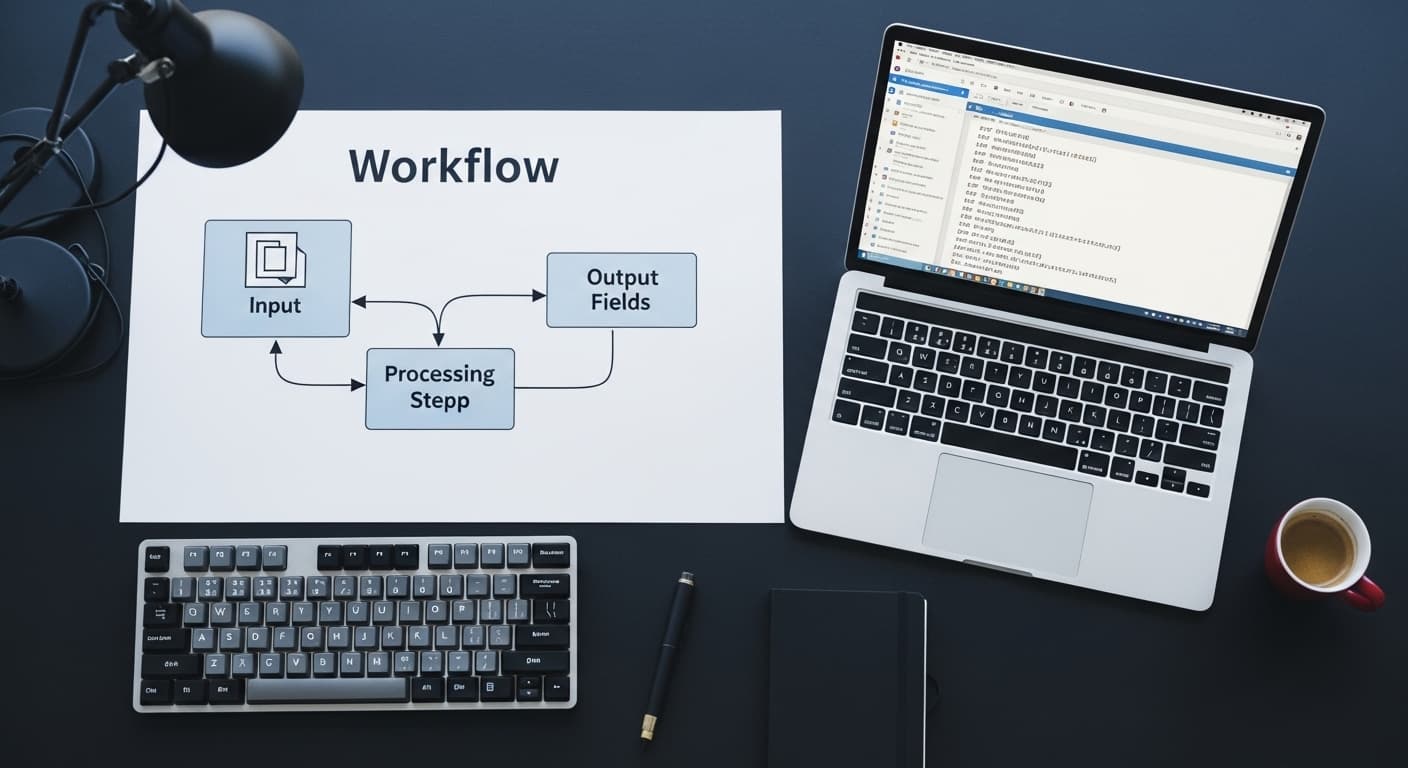
How to Automate Business Processes With LLMs in 2026
Step-by-step framework for identifying which business processes are LLM-automatable, designing the pipeline architecture, selecting orchestration tools (LangChain, n8n, custom), and building validation layers that make outputs production-safe.
Scale Your Project
Ready to build high-performance software? Our experts in New York handle the technical heavy lifting so you can focus on growth.
Get a Free Consultation