

Web App vs. Mobile App: Comparison for Startup Founders
Should you build a web app or a mobile app first? Here's a no-BS breakdown of costs, timelines, and strategy to help you make the right call.
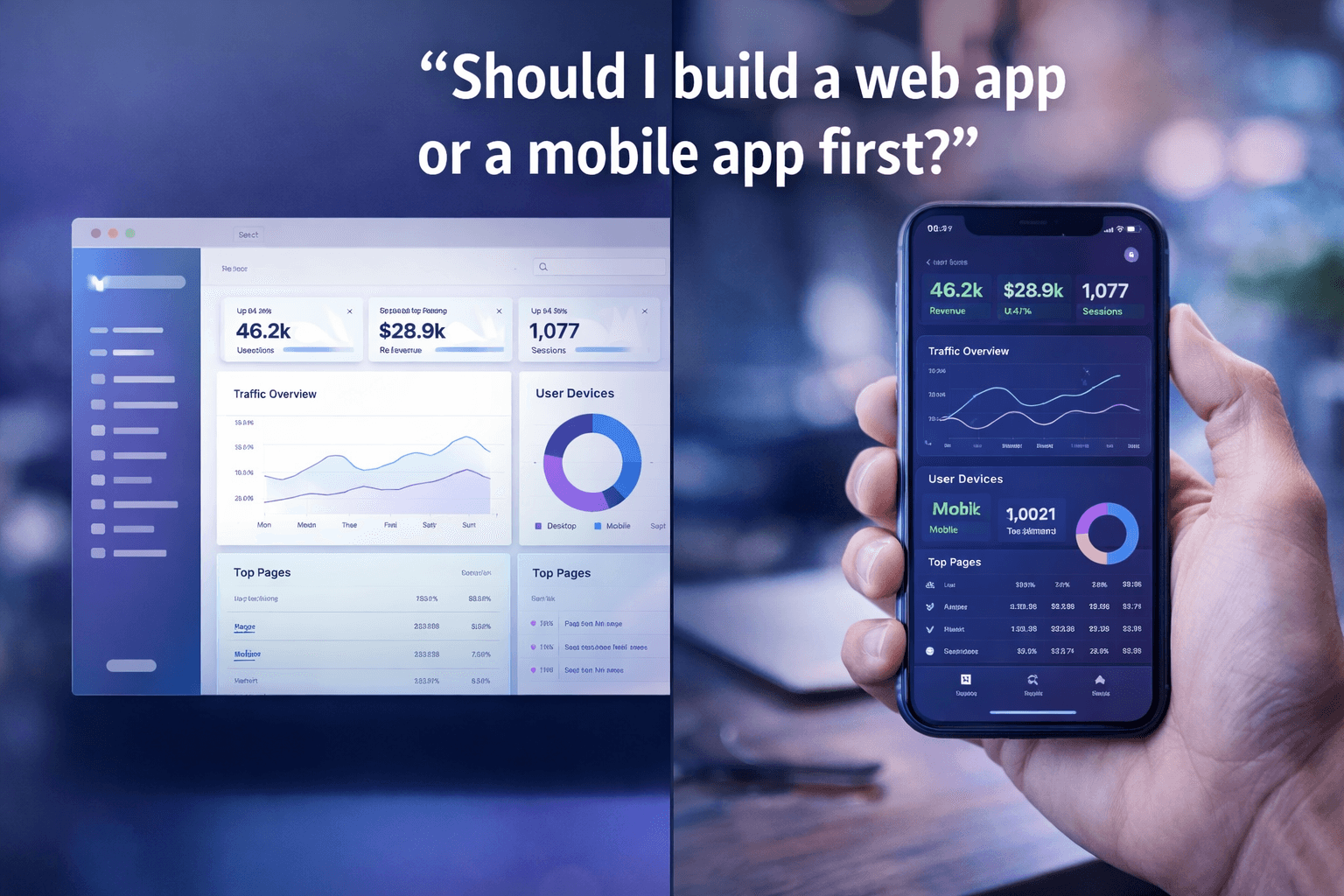
Building First: Web vs. Mobile App Strategy
"Should I build a web app or a mobile app first?"
We hear this question from every other founder who contacts us. The answer isn't complicated — but it matters a lot.
The Problem: Building on the Wrong Platform Burns Cash
Here's the scenario we see too often:
A founder spends $80K building native iOS and Android apps. Six months later, they have 200 users — 180 of whom are on desktop. The mobile apps are beautiful, polished, and completely irrelevant to how their customers actually use the product.
Or the opposite: a B2C fitness startup builds a responsive web app. Users bounce because the experience on mobile feels clunky, push notifications don't work, and there's no offline support. They should've gone native from day one.
The wrong platform choice doesn't just waste money. It creates friction for the users you're trying to win.
The Simple Decision Framework
Before thinking about technology, answer three questions:
| Question | If Yes → |
|---|---|
| Are my users primarily on desktop? | Web first |
| Does my product need camera, GPS, or Bluetooth? | Mobile first |
| Is my budget under $10K? | Web first |
If the answers split evenly, default to web. It's faster, cheaper, and easier to pivot.
Why Web Wins for Most B2B and Early-Stage Products
A modern web application built with frameworks like Next.js gives you:
- 6–10 week MVP timeline vs. 12–16 weeks for mobile
- One codebase for all devices and browsers
- Instant updates — no app store review, no waiting for users to update
- SEO traffic — Google indexes web pages, not app screens
- Progressive Web App (PWA) features — push notifications, offline mode, and home screen installation without the App Store
For SaaS products, marketplaces, dashboards, and internal tools, web is almost always the right first move.
When Mobile Wins
Go mobile first when:
- Your product is inherently mobile — fitness, social, food delivery, ride-sharing
- Push notifications drive your retention — mobile push has 3–10x higher engagement than web push
- You need native device features — GPS tracking, camera, biometrics, AR, Bluetooth
- App store presence matters for discoverability and trust
The Smart Sequence
The most cost-effective approach for most businesses:
Phase 1: Responsive web app → Validate idea, get early users, iterate fast
Phase 2: PWA enhancements → Add offline support, push notifications, installability
Phase 3: Native mobile → Build for power users once you have proven demand
This lets you validate before you invest.
Not sure which to build first? MAGEHIRE builds both web and mobile applications — and we'll tell you honestly which one your business needs right now. Get in touch.
Related expertise: Scale your product with our Mobile Development and Backend Engineering services.
What is Building First?
This solution focuses on solving core business challenges through strategic technical implementation. At its heart, it leverages modern engineering to drive operational efficiency and scalability.
How it Works
Magehire follows a rigorous 4-step methodology to ensure delivery excellence:
- Discovery: Mapping business goals to technical requirements.
- Architecture: Designing scalable, future-proof systems.
- Agile Build: Iterative development with transparent progress tracking.
- Launch & Scale: Strategic deployment and continuous optimization.
Primary Use Cases
- B2B SaaS: Building multi-tenant platforms with complex permission logic.
- Enterprise Modernization: Transitioning legacy systems to modern cloud infrastructures.
- AI Integration: Automating repetitive workflows to reduce operational overhead.
Cost and ROI Analysis
Investing in professional development is about long-term value. While initial costs range based on scope, the return on investment (ROI) is realized through reduced maintenance costs, improved user adoption, and the ability to scale without technical debt blocks.
When to Choose This Solution
Choose this approach when your business requires a high degree of customization, reliability, and technical leadership that generic off-the-shelf solutions cannot provide.
?Frequently Asked Questions
Keep Reading
Explore more insights from our team

Etched Hits $5B Valuation and $1B Sales in AI Chip Market
Etched emerges as a formidable rival to Nvidia, achieving a $5 billion valuation and $1 billion in sales, reshaping the AI chip landscape.
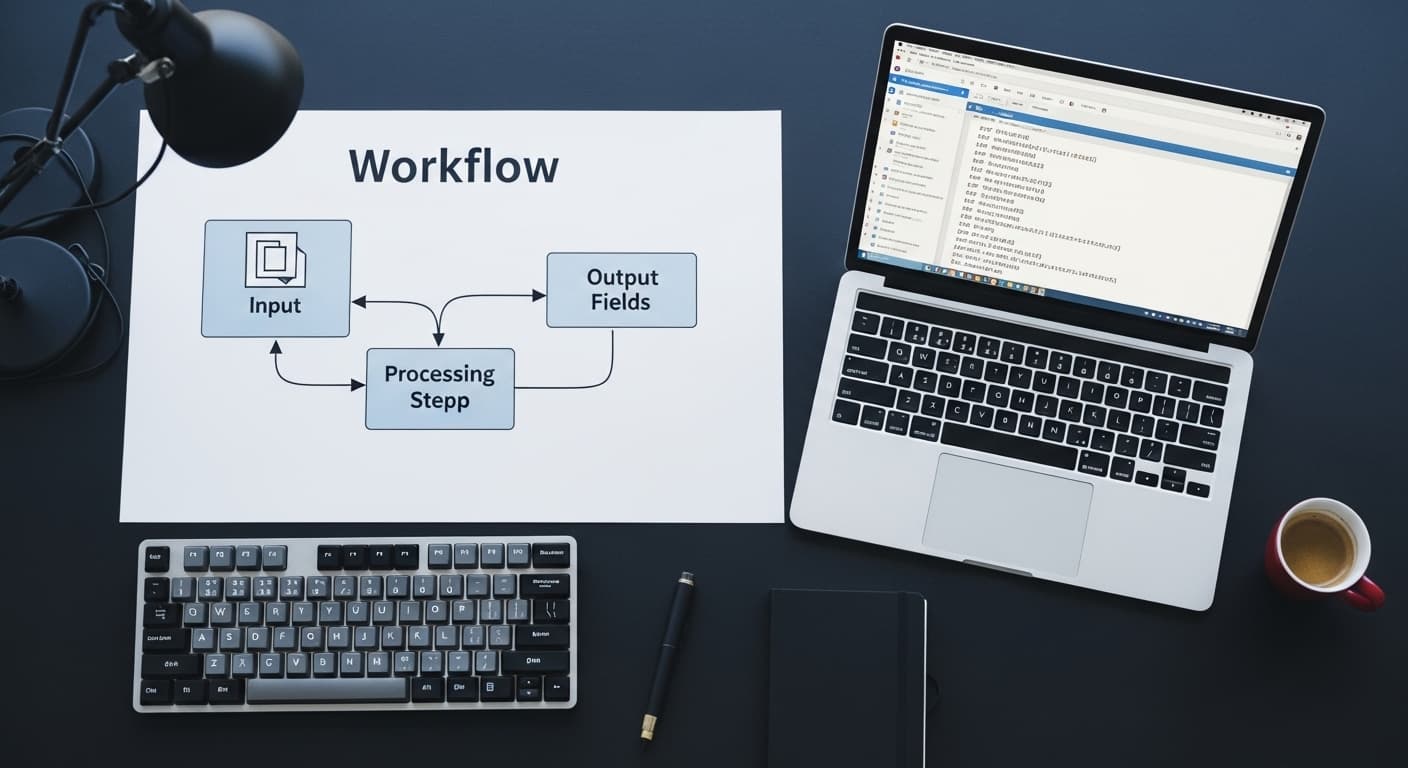
How to Automate Business Processes With LLMs in 2026
Step-by-step framework for identifying which business processes are LLM-automatable, designing the pipeline architecture, selecting orchestration tools (LangChain, n8n, custom), and building validation layers that make outputs production-safe.
Scale Your Project
Ready to build high-performance software? Our experts in New York handle the technical heavy lifting so you can focus on growth.
Get a Free Consultation