

What is AI Automation? The 2026 Business Growth Guide
AI automation leverages large language models (LLMs) to perform tasks that traditionally require human judgment. Unlike rigid RPA scripts, modern AI automation processes unstructured data, understands context, and adapts to new inputs. This guide covers how AI automation works, common use cases, and how to get started.

Transforming Operations with Enterprise AI Automation
AI automation is the use of artificial intelligence — including large language models (LLMs), machine learning, and intelligent agents — to perform business tasks that traditionally require human judgment, decision-making, or language understanding.
Unlike traditional automation, which follows rigid rules and scripts, AI automation can process unstructured data, understand context, generate content, and adapt to new inputs without explicit programming for every scenario.
How AI Automation Works
AI automation systems typically combine three layers:
- An AI model (such as GPT-4, Claude, or Mistral) that provides reasoning, language comprehension, and generation capabilities.
- An orchestration layer (such as LangChain, n8n, or custom code) that routes inputs, manages workflows, and connects the AI model to external tools and data sources.
- Integration connectors that allow the AI system to read from and write to your existing tools — CRMs, databases, email, messaging platforms, and APIs.
When a user or event triggers the workflow, the orchestration layer passes relevant context to the AI model, which processes the input and returns an output that gets routed to the appropriate destination.
AI Automation vs Traditional Automation (RPA)
| Factor | Traditional RPA | AI Automation |
|---|---|---|
| Data type | Structured only | Structured and unstructured |
| Decision-making | Rule-based | Context-aware, adaptive |
| Setup | Point-and-click flows | Prompt engineering + API design |
| Flexibility | Breaks with UI changes | Adapts to varied inputs |
| Best for | Data entry, form filling | Content generation, classification, analysis |
Traditional RPA (Robotic Process Automation) tools like UiPath or Automation Anywhere are designed for repetitive, rule-based tasks on structured data. AI automation extends this by handling tasks that require language understanding, summarization, classification, or reasoning.
Common AI Automation Use Cases
- Customer support automation: AI agents that handle tier-1 support queries, resolve common issues, and escalate complex cases to human agents.
- Document processing: Intelligent extraction of data from contracts, invoices, and legal documents using RAG (Retrieval-Augmented Generation) pipelines.
- Lead qualification and outreach: LLMs that score inbound leads, personalize outreach emails, and route qualified prospects to sales teams.
- Internal knowledge base chatbots: AI assistants connected to company wikis, Notion, Confluence, or Google Drive that answer employee questions instantly.
- Content creation and repurposing: Automated generation of blog drafts, social media posts, and marketing copy from existing content assets.
Who Should Consider AI Automation?
AI automation is most valuable for:
- Operations teams drowning in repetitive manual tasks like data entry, report generation, or email triage.
- SaaS product teams wanting to add AI-powered features (smart search, AI assistants, automated recommendations) to their products.
- SMBs and mid-market companies looking to scale output without proportionally growing headcount.
- Enterprise teams evaluating how to modernize workflows with generative AI while maintaining data privacy and compliance.
How to Get Started With AI Automation
- Identify high-ROI automation candidates. Look for tasks that are repetitive, time-consuming, and involve processing text or documents.
- Choose the right AI model. Consider cost, latency, accuracy, and data privacy requirements. GPT-4 is powerful but expensive; open-source models may suit internal use cases.
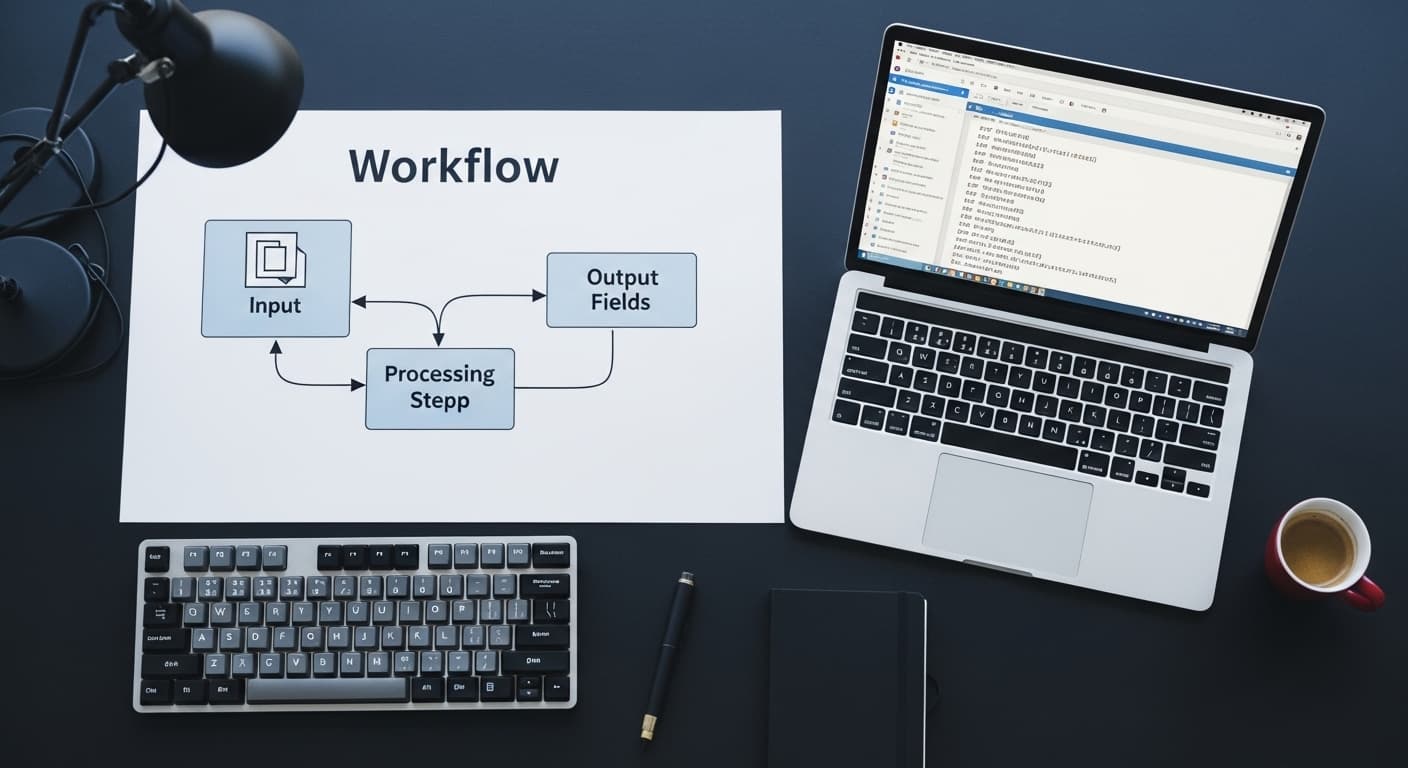
- Design the workflow architecture. Map the input, processing, and output steps. Define how the AI system integrates with your existing tools.
- Build and test in a sandbox. Start with a focused pilot on one workflow before scaling to multiple processes.
- Monitor, measure, and iterate. Track accuracy, processing time, and cost savings. Refine prompts and workflows based on real usage data.
Ready to implement AI Automation?
The landscape of AI changes rapidly, but the fundamentals of good architectural design remain the same. If you are exploring how LLMs, agentic workflows, and orchestration can scale your operations or feature set, we are here to help point you in the right direction.
Magehire is a dedicated AI automation consulting agency that helps businesses reliably construct automation pipelines without sacrificing security.
Book a discovery session with our technical team today to discuss your workflow challenges, identify automation opportunities, and get a realistic roadmap for your next big operational leap.
Related expertise: Scale your product with our AI Automation and Backend Engineering services.
What is Transforming Operations with Enterprise AI Automation?
This solution focuses on solving core business challenges through strategic technical implementation. At its heart, it leverages modern engineering to drive operational efficiency and scalability.
How it Works
Magehire follows a rigorous 4-step methodology to ensure delivery excellence:
- Discovery: Mapping business goals to technical requirements.
- Architecture: Designing scalable, future-proof systems.
- Agile Build: Iterative development with transparent progress tracking.
- Launch & Scale: Strategic deployment and continuous optimization.
Primary Use Cases
- B2B SaaS: Building multi-tenant platforms with complex permission logic.
- Enterprise Modernization: Transitioning legacy systems to modern cloud infrastructures.
- AI Integration: Automating repetitive workflows to reduce operational overhead.
Cost and ROI Analysis
Investing in professional development is about long-term value. While initial costs range based on scope, the return on investment (ROI) is realized through reduced maintenance costs, improved user adoption, and the ability to scale without technical debt blocks.
When to Choose This Solution
Choose this approach when your business requires a high degree of customization, reliability, and technical leadership that generic off-the-shelf solutions cannot provide.
?Frequently Asked Questions
Keep Reading
Explore more insights from our team

Etched Hits $5B Valuation and $1B Sales in AI Chip Market
Etched emerges as a formidable rival to Nvidia, achieving a $5 billion valuation and $1 billion in sales, reshaping the AI chip landscape.
How to Automate Business Processes With LLMs in 2026
Step-by-step framework for identifying which business processes are LLM-automatable, designing the pipeline architecture, selecting orchestration tools (LangChain, n8n, custom), and building validation layers that make outputs production-safe.
Scale Your Project
Ready to build high-performance software? Our experts in New York handle the technical heavy lifting so you can focus on growth.
Get a Free Consultation