

What is an MVP? Definition and Strategy for Startups
A Minimum Viable Product (MVP) isolates your core value proposition and ships it quickly to validate the market. We cover what features to include, what to cut, and how to balance speed with production-ready software architecture to avoid throwing code away down the line.

Minimum Viable Product: Definition, Purpose, and Strategy
A Minimum Viable Product (MVP) is the simplest functional version of a product that delivers enough value to attract early users, validate a business hypothesis, and generate feedback for future development.
The MVP concept, popularized by Eric Ries in The Lean Startup, is a strategy for reducing waste in product development. Instead of building a fully featured product over many months, teams ship a focused version quickly, learn from real user behavior, and iterate based on evidence — not assumptions.
What Makes a Good MVP
A strong MVP is not a broken product or a prototype. It is a real product that works — just with a deliberately limited feature set. A good MVP includes:
- One core value proposition. The single most important thing your product does for users.
- A complete user journey. Users should be able to sign up, use the core feature, and get value — even if secondary features are missing.
- Production-quality code. An MVP should be built to be extended, not thrown away. Cutting scope is smart; cutting code quality is not.
- Analytics and feedback mechanisms. You should be able to measure how users interact with the product and collect qualitative feedback.
What to Include in an MVP (and What to Cut)
| Include | Cut for Later |
|---|---|
| User authentication (sign up / log in) | Social login, SSO |
| Core feature (the one thing) | Nice-to-have features |
| Basic admin dashboard | Advanced analytics |
| Responsive mobile web | Native mobile app |
| Stripe payment integration | Complex billing tiers |
| Email notifications | Push notifications, SMS |
The guiding principle: if removing a feature doesn't prevent a user from getting core value, cut it.
MVP vs Prototype vs Proof of Concept
| Term | Purpose | Audience | Quality |
|---|---|---|---|
| Proof of Concept | Prove technical feasibility | Internal team | Throwaway code |
| Prototype | Test UX and design | Investors, stakeholders | Clickable mockup |
| MVP | Validate market demand | Real users | Production-ready |
An MVP is the most advanced of the three. It's real software that ships to real users. Prototypes and proofs of concept are internal tools; an MVP is external.
How Long Does It Take to Build an MVP?
A focused B2B SaaS MVP typically takes 8–14 weeks from kickoff to launch. This includes:
- Weeks 1–2: Discovery, feature scoping, architecture design
- Weeks 3–6: Core development (frontend, backend, database, API)
- Weeks 7–8: Integration, testing, QA
- Weeks 9–10: Deployment, monitoring, launch preparation
Consumer apps or marketplace MVPs may take slightly longer due to multi-sided design requirements.
How Much Does an MVP Cost?
MVP development cost depends on complexity, team location, and technology choices:
- Simple MVP (landing page + core feature + auth): $15,000–$30,000
- Standard MVP (multi-feature SaaS with billing): $30,000–$60,000
- Complex MVP (marketplace, AI features, real-time): $60,000–$120,000+
Working with an experienced agency like Magehire reduces risk and time-to-market compared to assembling a freelance team or hiring junior developers.
Need an Engineering Team to Build Your MVP?
Turning an idea into a functional, revenue-generating software product requires experienced product-thinking combined with excellent software craftsmanship.
Magehire is a fullstack web development agency that acts as the dedicated engineering arm for ambitious founders, delivering production-ready MVPs in just 8–14 weeks.
Book a strategy session with us today to scope out your product features, establish an architectural roadmap, and get a clear estimate on your timeline to launch.
Related expertise: Scale your product with our B2B SaaS Development and Product Design services.
What is Minimum Viable Product?
This solution focuses on solving core business challenges through strategic technical implementation. At its heart, it leverages modern engineering to drive operational efficiency and scalability.
How it Works
Magehire follows a rigorous 4-step methodology to ensure delivery excellence:
- Discovery: Mapping business goals to technical requirements.
- Architecture: Designing scalable, future-proof systems.
- Agile Build: Iterative development with transparent progress tracking.
- Launch & Scale: Strategic deployment and continuous optimization.
Primary Use Cases
- B2B SaaS: Building multi-tenant platforms with complex permission logic.
- Enterprise Modernization: Transitioning legacy systems to modern cloud infrastructures.
- AI Integration: Automating repetitive workflows to reduce operational overhead.
Cost and ROI Analysis
Investing in professional development is about long-term value. While initial costs range based on scope, the return on investment (ROI) is realized through reduced maintenance costs, improved user adoption, and the ability to scale without technical debt blocks.
When to Choose This Solution
Choose this approach when your business requires a high degree of customization, reliability, and technical leadership that generic off-the-shelf solutions cannot provide.
?Frequently Asked Questions
Keep Reading
Explore more insights from our team

Etched Hits $5B Valuation and $1B Sales in AI Chip Market
Etched emerges as a formidable rival to Nvidia, achieving a $5 billion valuation and $1 billion in sales, reshaping the AI chip landscape.
How to Automate Business Processes With LLMs in 2026
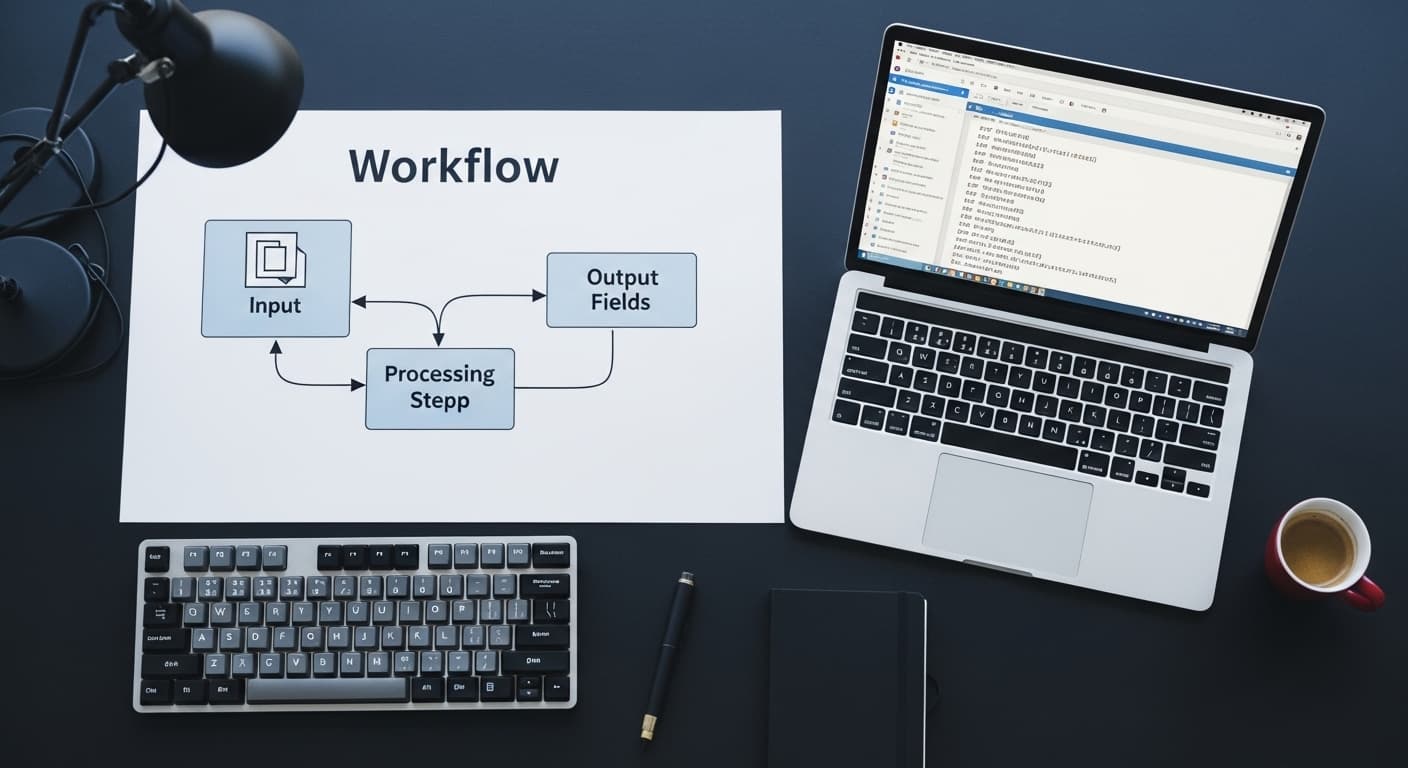
Step-by-step framework for identifying which business processes are LLM-automatable, designing the pipeline architecture, selecting orchestration tools (LangChain, n8n, custom), and building validation layers that make outputs production-safe.
Scale Your Project
Ready to build high-performance software? Our experts in New York handle the technical heavy lifting so you can focus on growth.
Get a Free Consultation