

Choosing the Right Software Development Partner in 2026
Hiring the wrong dev team is the fastest way to burn runway. Here's a framework for evaluating software development partners — from technical depth and communication to architecture philosophy and long-term fit.

Criteria for Software Development Partner Selection
Choosing a software development partner is one of the highest-leverage decisions a founder or CTO can make. The right team accelerates your product roadmap by months. The wrong one sets you back by years — and burns through budget in the process.
Whether you're building your first MVP, scaling a SaaS platform to tens of thousands of users, or modernizing a legacy enterprise system, the evaluation criteria are surprisingly consistent. Here's a practical framework you can use in 2026 and beyond.
- Technical Depth Over Buzzword Fluency
Every agency lists React, Node, and AWS on their website. That tells you almost nothing.
What you actually want to know is:
Can they articulate trade-offs? Ask why they'd choose Next.js over Remix, or MongoDB over PostgreSQL for your specific use case. A strong partner doesn't push a single stack — they recommend what fits.
Do they understand system design? Ask about caching strategies, database indexing, message queues, and how they handle concurrent users at scale.
Can they show production-grade work? Not Dribbble mockups — real applications handling real traffic, with real uptime requirements.
Red flag: If a team can list 15 frameworks but can't explain when not to use one of them, keep looking.
- Process and Communication — The Silent Differentiator
Technology is only half the equation. How a partner communicates will determine whether your project ships on time or spirals into scope creep.
Look for these signals:
Structured updates: Weekly stand-ups, sprint demos, and transparent task boards (Jira, Linear, or similar).
Proactive problem-raising: Good teams surface blockers before they become crises. Ask for an example of when they pushed back on a requirement and why.
Timezone and availability alignment: If your team is in New York and the dev team is in a fundamentally different timezone, understand exactly how async handoffs work.
A partner who is technically brilliant but impossible to reach on Slack will cost you more than a slightly less senior team that communicates like clockwork.
- Architecture Philosophy Matters
The best development partners think beyond the ticket.
Do they build for change? Software requirements evolve. A well-architected system lets you swap a payment provider or add a new user role without rewriting half the codebase.
Do they care about observability? Logging, monitoring, and error tracking should be built in from day one — not bolted on after the first production outage.
Do they write tests? Not just unit tests. Integration tests, end-to-end tests, and, for critical flows, automated regression suites.
Ask to see the architecture diagram of a past project. If they don't have one, that's a data point.
- Look at Their Own Product
A development agency's website is their most visible product. Evaluate it critically:
Is it fast? Run it through Google PageSpeed Insights.
Is the design modern and polished, or does it look like a template from 2019?
Is the content well-structured and clearly written?
If a team can't ship a strong version of their own brand, you should question whether they'll ship a strong version of yours.
- The Portfolio Conversation
Portfolios should trigger conversations, not just admiration.
When reviewing case studies, ask:
What was the hardest technical challenge on this project? The answer reveals depth.
What would you do differently if you rebuilt it today? This shows self-awareness and growth.
What happened after launch? A partner who disappears post-launch isn't a partner — they're a vendor.
The best agencies maintain long-term relationships with their clients. That recurring trust is the strongest signal of all.
- Pricing Models and What They Reveal
How a team prices their work tells you how they think about value:
Model Best For Watch Out For
Fixed price Well-defined projects with clear scope Scope changes become expensive and adversarial
Time & materials Exploratory or evolving projects Runaway costs without clear governance
Retainer Ongoing development and iteration May not feel urgent if there's no sprint structure
Milestone-based Phased delivery with accountability Requires strong PM alignment on deliverables
There's no universally "right" model. The best partners are flexible and transparent about the trade-offs of each.
- Cultural and Strategic Fit
Beyond technical skill, you want a team that genuinely understands your industry and cares about your outcomes.
Do they ask business questions, not just technical ones? A great partner wants to know your revenue model, your competition, and your growth targets.
Do they challenge your assumptions? "Yes" teams are dangerous. The best partners push back when they see a faster, cheaper, or more reliable way to solve the problem.
Are they invested in your success? Look for partners who propose improvements you didn't ask for, flag UX issues proactively, and treat your product as if it were their own.
Making the Decision
Here's a quick checklist for your final evaluation:
Reviewed at least 2 relevant case studies with technical depth
Had a live technical conversation (not just a sales call)
Checked references from a past client in a similar industry or stage
Agreed on a communication cadence and escalation process
Aligned on a pricing model that fits the project's uncertainty level
Confirmed post-launch support availability and terms
The right software development partner won't just build what you ask for — they'll help you figure out what to build in the first place, and then execute it at a level that earns your customers' trust.
At MAGEHIRE, we help founders, CTOs, and enterprise teams design, build, and scale production-grade software — from MVPs to platforms supporting thousands of concurrent users. Explore our services or get in touch.
Related expertise: Scale your product with our B2B SaaS Development and Enterprise Modernization services.
What is Criteria for Software Development Partner Selection?
This solution focuses on solving core business challenges through strategic technical implementation. At its heart, it leverages modern engineering to drive operational efficiency and scalability.
How it Works
Magehire follows a rigorous 4-step methodology to ensure delivery excellence:
- Discovery: Mapping business goals to technical requirements.
- Architecture: Designing scalable, future-proof systems.
- Agile Build: Iterative development with transparent progress tracking.
- Launch & Scale: Strategic deployment and continuous optimization.
Primary Use Cases
- B2B SaaS: Building multi-tenant platforms with complex permission logic.
- Enterprise Modernization: Transitioning legacy systems to modern cloud infrastructures.
- AI Integration: Automating repetitive workflows to reduce operational overhead.
Cost and ROI Analysis
Investing in professional development is about long-term value. While initial costs range based on scope, the return on investment (ROI) is realized through reduced maintenance costs, improved user adoption, and the ability to scale without technical debt blocks.
When to Choose This Solution
Choose this approach when your business requires a high degree of customization, reliability, and technical leadership that generic off-the-shelf solutions cannot provide.
?Frequently Asked Questions
Keep Reading
Explore more insights from our team

Etched Hits $5B Valuation and $1B Sales in AI Chip Market
Etched emerges as a formidable rival to Nvidia, achieving a $5 billion valuation and $1 billion in sales, reshaping the AI chip landscape.
How to Automate Business Processes With LLMs in 2026
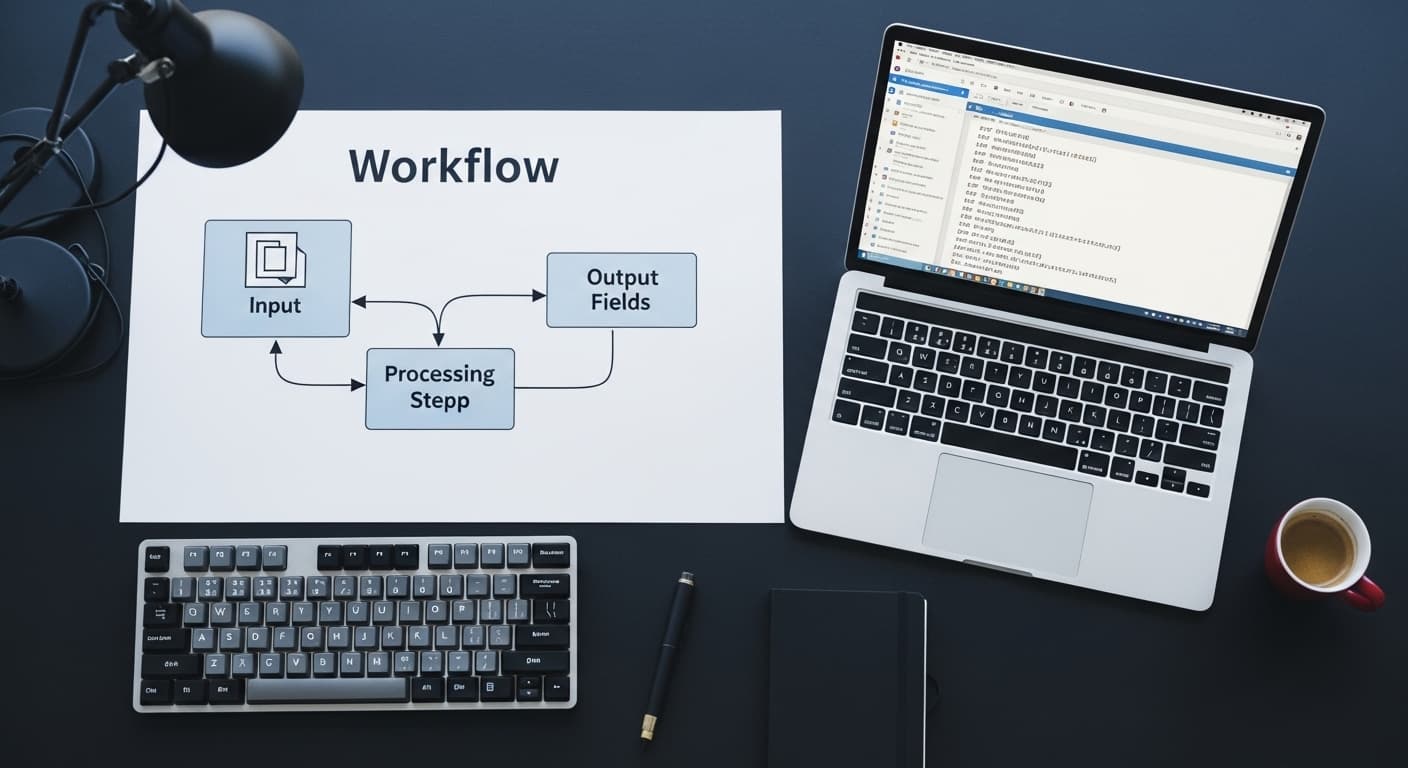
Step-by-step framework for identifying which business processes are LLM-automatable, designing the pipeline architecture, selecting orchestration tools (LangChain, n8n, custom), and building validation layers that make outputs production-safe.
Scale Your Project
Ready to build high-performance software? Our experts in New York handle the technical heavy lifting so you can focus on growth.
Get a Free Consultation